Yes or No Wheels & Random Decision Spinners
The Yes or No category on Spin The Wheel Random Picker brings together quick decision wheels for everyday choices, games, relationships, shopping, food, plans, and more. If you need a fast answer without overthinking, choose a wheel, spin it, and let randomness make the call.
Browse Yes or No Wheels
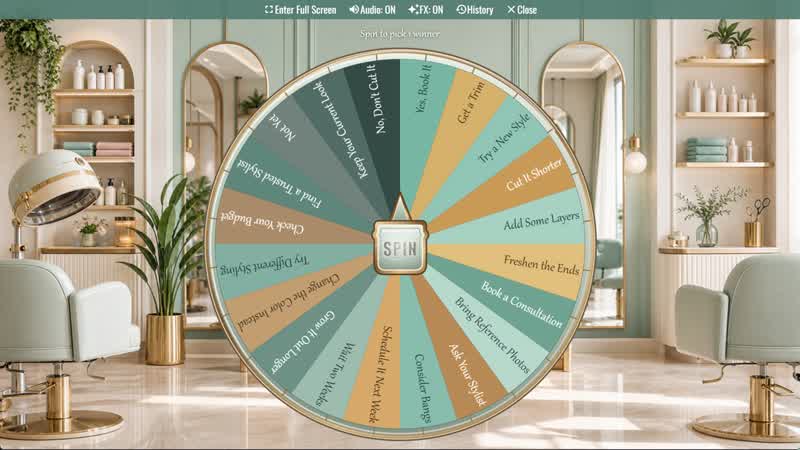
Should I Get a Haircut? Wheel
Considering a haircut? Spin for one of twenty prompts about trims, new styles, consultations, maintenance, timing, and keeping your current look.
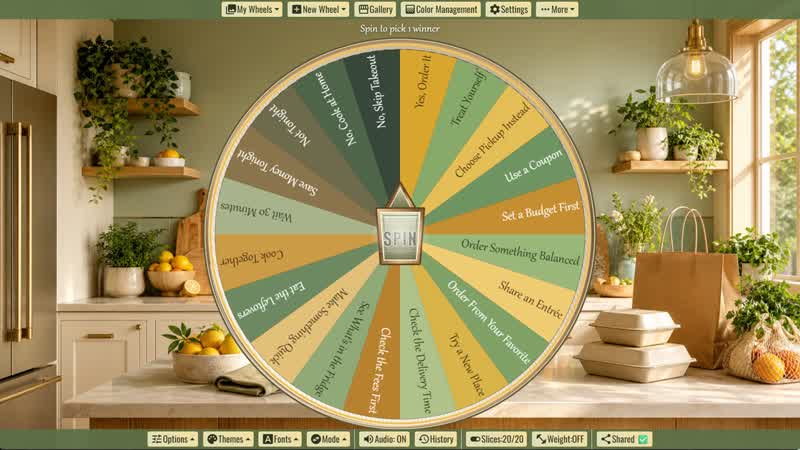
Should I Order Takeout? Wheel
Not sure whether to order food? Spin for one of twenty takeout, pickup, budget, delivery, leftovers, and cooking suggestions.
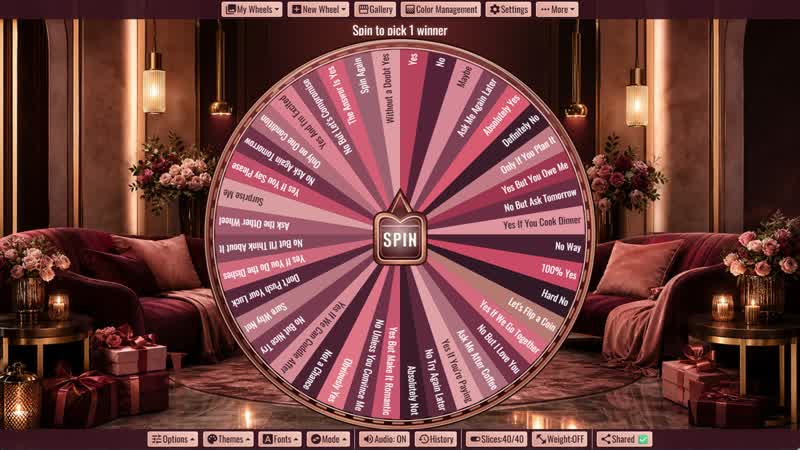
Yes or No Wheel for Couples
A playful couples decision wheel with yes, no, maybe, romantic, funny, and compromise-style answers.
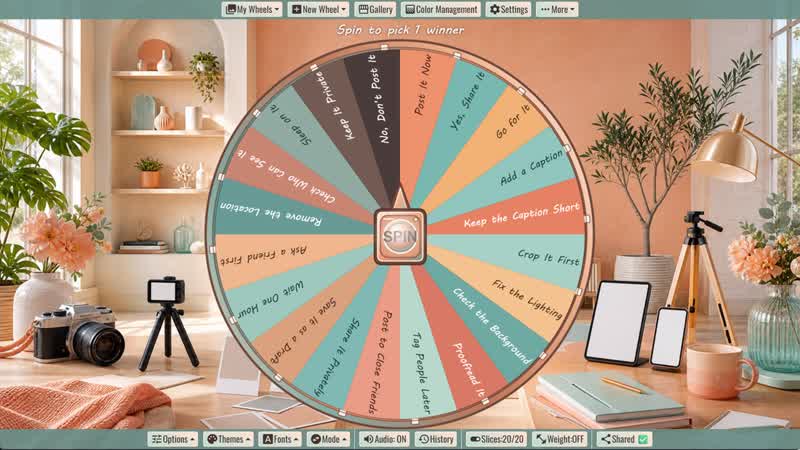
Should I Post It? Wheel
Before sharing a photo, video, or update, spin for one of twenty posting, editing, timing, and privacy prompts.
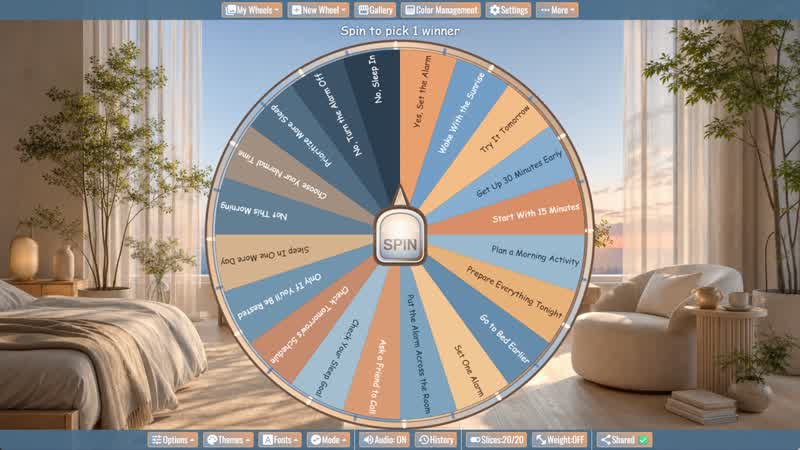
Should I Wake Up Early? Wheel
Considering an early start? Spin for one of twenty alarm, preparation, morning routine, and sleep-priority prompts.
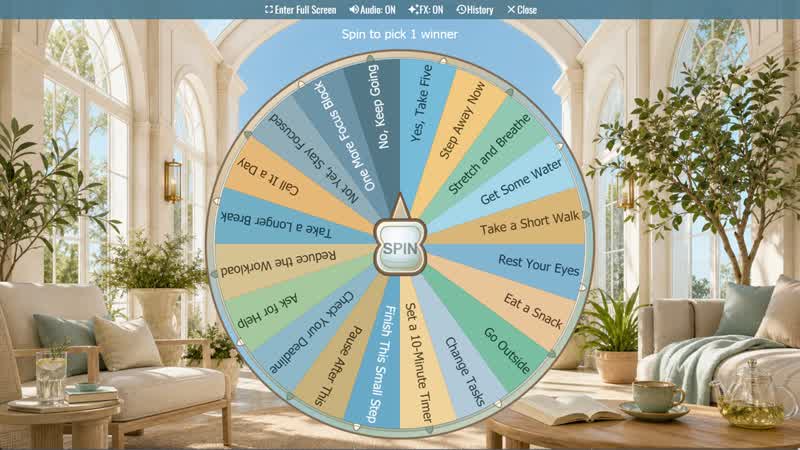
Should I Take a Break? Wheel
Not sure whether to pause or keep working? Spin for one of twenty practical break, reset, and focus suggestions.
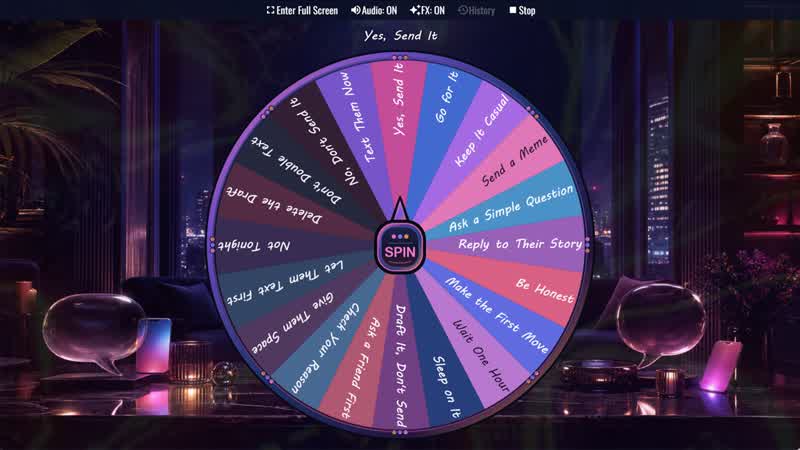
Should I Text Them? Wheel
Not sure whether to send that message? Spin for one of twenty prompts about texting now, waiting, revising your draft, or giving them space.
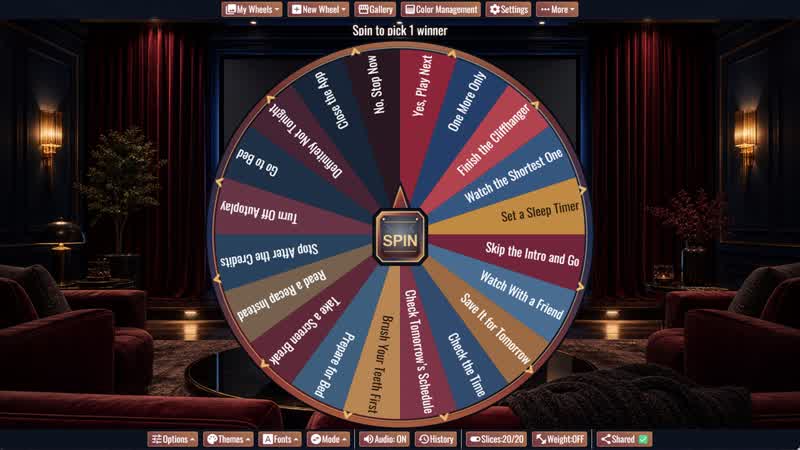
Should I Watch One More Episode? Wheel
When autoplay starts, spin for one of twenty playful answers about watching another episode or stopping for the night.
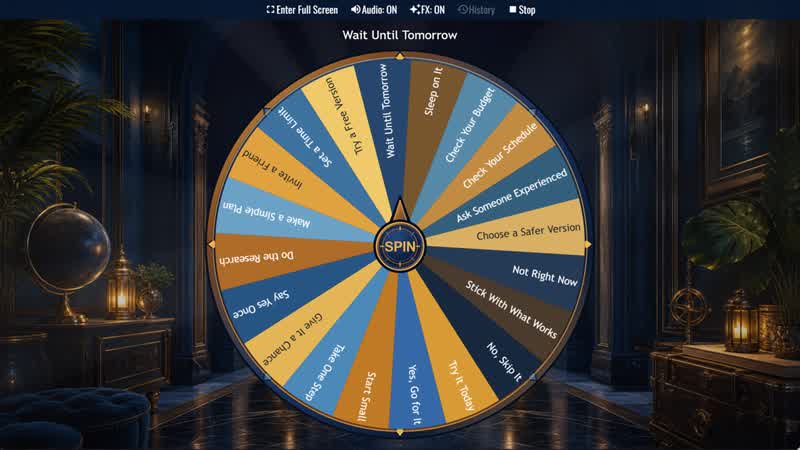
Should I Try Something New? Wheel
Considering a new experience? Spin for one of twenty responses ranging from Go for It and Start Small to Sleep on It or Skip It.
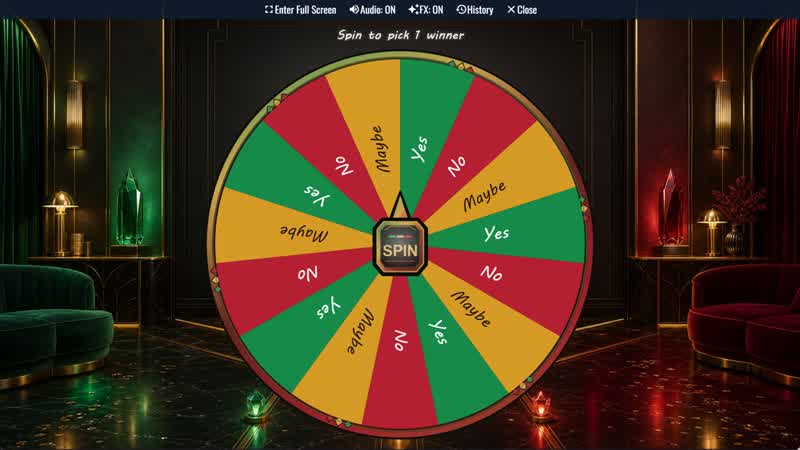
Yes, No, Maybe Classic Wheel
A simple balanced three-choice spinner with only Yes, No, and Maybe.
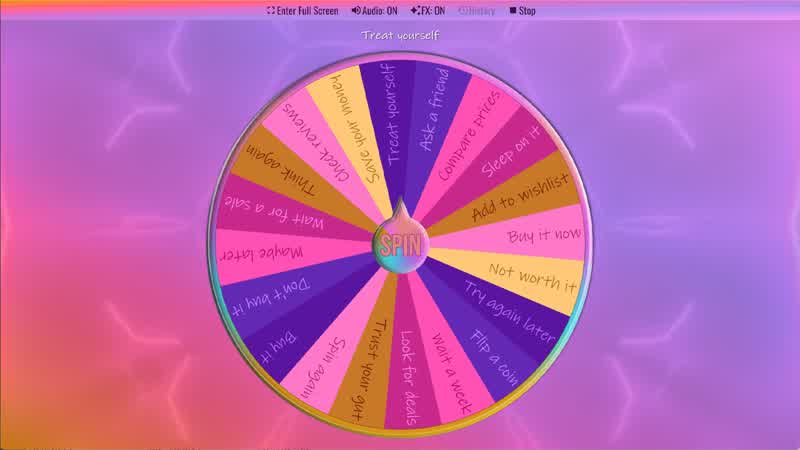
Should I Buy It Wheel
Spin the Should I Buy It Wheel to decide whether to buy something.
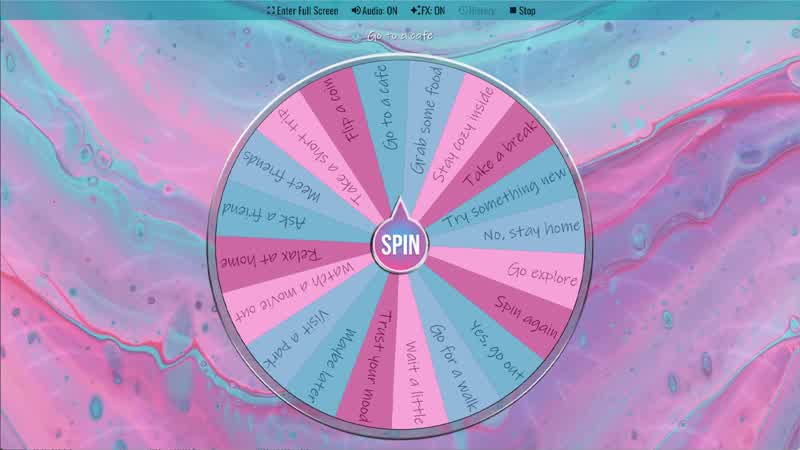
Should I Go Out Wheel
Spin the Should I Go Out Wheel to decide whether to go out or stay home.
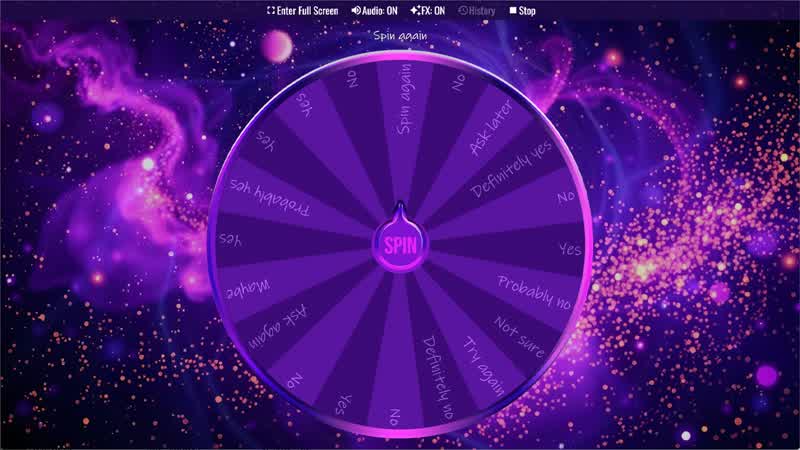
Yes or No Wheel
Ask a question and spin the Yes or No Wheel for a fast random answer including Yes, No, Maybe, and more.
About Yes or No Spin Wheels
The main Yes or No Wheel is a general-purpose random answer spinner, while other wheels in this category are built around specific questions such as whether to buy something, go out, send a text, order takeout, take a break, or try something new.
A wheel can feel more satisfying than flipping a coin because the visual spin creates anticipation and makes the result feel more deliberate. Sometimes your reaction to the answer tells you as much as the answer itself. If you feel relieved when the wheel lands on one outcome, you may already know what you wanted.
Browse Yes or No Wheels
This category includes simple Yes/No spinners, Yes No Maybe wheels, themed decision wheels, and context-specific “Should I?” wheels. Some give a clear binary answer, while others include results such as Maybe, Not Yet, Go for It, Wait, Ask Again, or other responses designed for the specific question.
When to Use a Yes or No Wheel
Yes or No wheels are especially useful when you are genuinely undecided, dealing with decision fatigue, or trying to settle a choice between friends or family. Instead of debating the same small decision repeatedly, a random spinner gives you a neutral answer and helps you move on.
They also work well for party games, classroom activities, group challenges, and casual conversations. For more complex choices with several possible outcomes, browse our Decision Wheels. For social activities, try the Party Wheels, Game Wheels, or Truth or Dare Wheels.
Yes or No Wheel
The Yes or No Wheel is the main general-purpose random answer wheel in this category. Ask your question, spin the wheel, and get an instant result. It is useful for everyday decisions, games, classroom prompts, friendly debates, or anytime you want a quick outside nudge.
Should I? Decision Wheels
Some wheels are designed around specific real-life questions. You may find wheels for choices such as whether to buy something, go out, send a text, order food, post something, wake up early, take a break, or try something new. These themed wheels can give more context-specific answers than a basic Yes/No spinner.
Because new decision wheels are added over time, this category can continue to grow with new “Should I?” questions and everyday scenarios.
Customizing a Yes or No Wheel
You can duplicate and customize many wheels to fit your own situation. Change the wording, add or remove outcomes, adjust probability weights, or create responses such as “Do it now,” “Wait,” “Maybe,” or “Ask again later.” You can also share your customized wheel with other people.
If you want a ready-made multi-answer format, try the Yes No Wheel, or three balanced outcomes Yes, No, or Maybe. For number-based random choices, you can also explore our Number Wheels.